
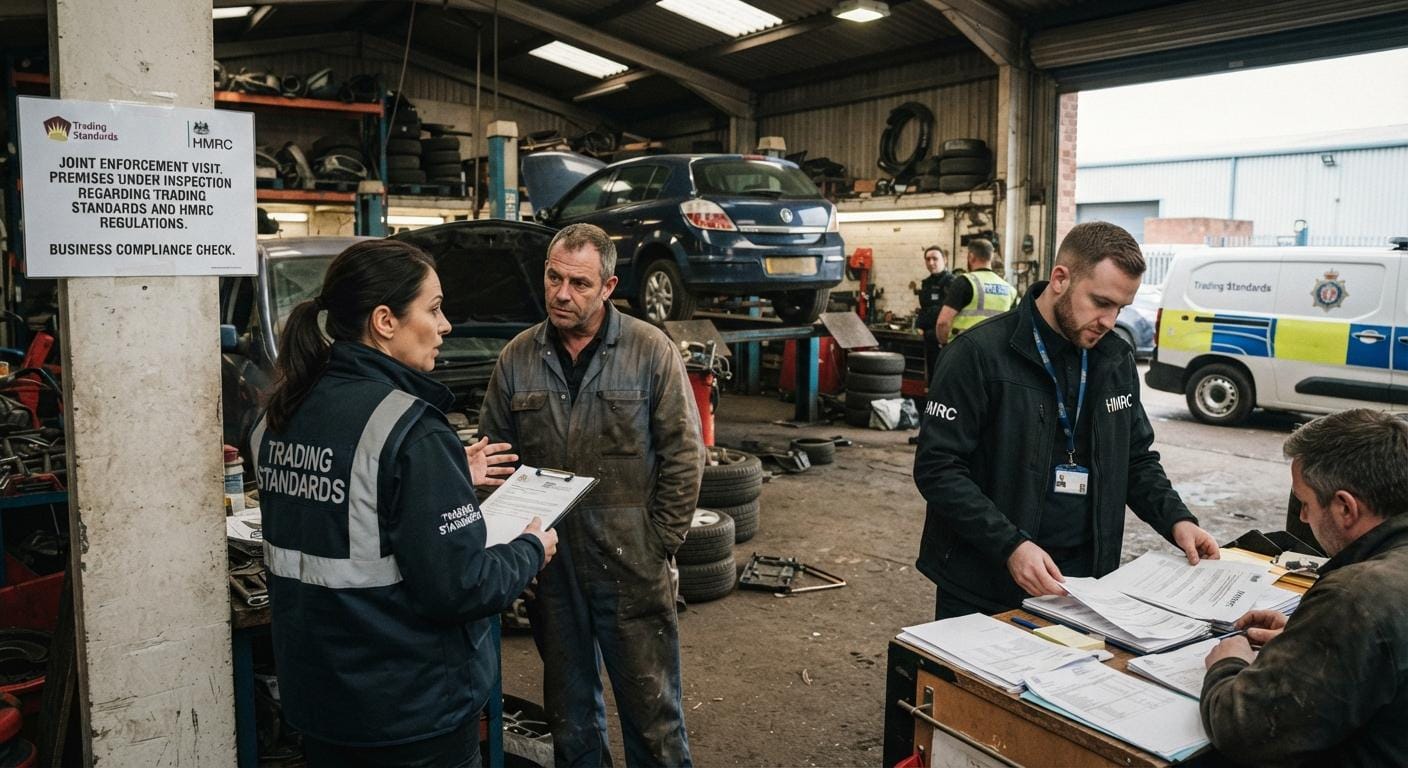
Authorities are stepping up enforcement against tax evasion and illegal trading, as businesses are warned to ensure their affairs are properly registered and their legal obligations are met.
WOLVERHAMPTON — 16 August 2026
People running businesses without meeting their legal and tax obligations are facing increased scrutiny as HM Revenue and Customs (HMRC) steps up enforcement against illegal activity on Britain’s high streets.
The crackdown is part of a wider national effort involving HMRC, Trading Standards, police and other government agencies to tackle suspected tax fraud, organised crime, illicit goods and businesses that use legitimate-looking premises to conceal illegal activity.
In June 2026, HMRC announced plans for at least 30,000 high-street-related enforcement interventions during the 2026–27 financial year. The programme includes unannounced visits, tax investigations, seizures and warning letters, with particular attention to businesses linked to suspected criminal activity.
The government has also outlined plans for a High Street Organised Crime Unit bringing together enforcement agencies to tackle criminal networks operating through commercial businesses.
Although these measures apply nationally, they are relevant to businesses across Wolverhampton and the wider Black Country. The published plans do not establish how many interventions will take place locally or confirm a separate Wolverhampton-wide operation targeting every unregistered business.
Businesses operating under the radar face important questions
The enforcement drive raises an important issue for people who are earning money through a business but have not checked whether they need to register with HMRC or comply with other legal requirements.
This can include people operating shops, barbershops, beauty services, market stalls, online businesses, motor trade and other commercial activities.
Some businesses operate legitimately as sole traders without being registered at Companies House. Others may have registration requirements relating to tax, VAT, employment, licensing or the nature of their activities.
The important distinction is whether the business is complying with the rules that apply to it.
People who deliberately conceal income, submit false tax information, evade VAT where registration is required or operate unlawfully should not assume that remaining small or trading privately will protect them from investigation.
HMRC has specifically said its enforcement programme will target businesses associated with tax evasion, money laundering, illicit tobacco and vaping products, labour exploitation and the manipulation of sales records.
Trading without registering: what are the rules?
Not every person earning money from a business needs to form a limited company. However, tax obligations can arise even where someone operates alone, works from home or accepts cash payments.
For example, a sole trader whose gross trading income exceeds the £1,000 trading allowance will generally need to consider registering for Self Assessment, although the precise reporting requirements depend on their circumstances.
Businesses may also have separate obligations concerning VAT, payroll, business rates, licences and consumer protection. The rules depend on the activity, turnover, premises and business structure involved.
A person who has not registered a limited company is not necessarily operating illegally. Equally, having a company registration does not automatically mean that the business is complying with tax and other legal requirements.
The concern for enforcement authorities is not simply whether a business appears on a register, but whether it is meeting the obligations that apply to its activities.
A warning to businesses in Wolverhampton
For people running businesses in Wolverhampton and surrounding areas, the message is straightforward: understand your obligations, keep accurate records and make sure any required registrations and tax returns are up to date.
Businesses should not assume that cash transactions, informal arrangements, operating from home or trading through social media remove their responsibilities.
HMRC’s announced enforcement programme includes work with partner agencies and investigations into businesses suspected of being connected to illegal activity. However, an inspection does not automatically mean that a business has committed an offence, and any allegation must be assessed on its evidence.
Legitimate businesses that are unsure about their position should seek advice from HMRC or a qualified accountant rather than ignore the issue.
Honest businesses and fair competition
Businesses that meet their tax and regulatory obligations can face an unfair competitive disadvantage when other operators deliberately evade tax or sell illegal goods.
The government’s stated objective is to tackle criminal activity on the high street and help legitimate businesses compete on a fairer basis.
For Wolverhampton, the national programme provides a reason for businesses to review their compliance, but it should not be interpreted as proof that every small business, cash-based trader or unregistered sole trader is under investigation.
There is no verified evidence cited here of a separate local operation targeting all unregistered businesses in Wolverhampton.
The message is therefore not that every unregistered business is breaking the law. It is that anyone making money through commercial activity should understand which rules apply and take steps to comply.
Businesses that have not checked their position should not wait for an enquiry before seeking advice and putting their affairs in order.