
Close Menu
  • Home
  • Local
  • Business
  • Technology
  • Health & Fitness
  • Motoring
  • Kids
  • Events
Facebook X (Twitter) Telegram LinkedIn
  • About
  • Contact
  • Privacy Policy
Sunday, December 7
Facebook X (Twitter) LinkedIn Telegram
Community ObserverCommunity Observer
  • Home
  • Local
  • Business
  • Technology
  • Health & Fitness
  • Motoring
  • Kids
  • Events
Trending
  • Škoda Auto enters Saudi Arabian market, strengthening its presence in the Middle East
  • Garden waste collection charges remain frozen for 2026
  • Demolition works underway on derelict East Park site to pave way for new affordable homes
  • Sandwell Council marks the final day of Youth Work Week 2025
  • Targeted operation tackles untaxed and suspected abandoned vehicles in Smethwick
  • More clubs and stars set to join city’s Sporting Hall of Fame
  • Wide ranging revamp completed for city park
  • Artwork by 200 young people goes on display
Facebook X (Twitter) Telegram LinkedIn
Community ObserverCommunity Observer
You are at :Home»Health & Fitness»Aston University research finds that social media can be used to increase fruit and vegetable intake in young people
Health & Fitness Local News 3 Mins ReadApril 24, 2024No Comments2 Views

Aston University research finds that social media can be used to increase fruit and vegetable intake in young people

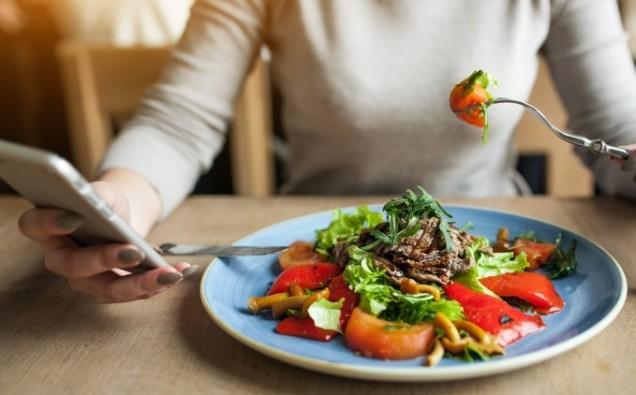
Researchers from Aston University have found that people following healthy eating accounts on social media for as little as two weeks ate more fruit and vegetables and less junk food.

Previous research has shown that positive social norms about fruit and vegetables increases individuals’ consumption. The research team sought to investigate whether positive representation of healthier food on social media would have the same effect. The research was led by Dr Lily Hawkins, whose PhD study it was, supervised by Dr Jason Thomas and Professor Claire Farrow in the School of Psychology.

The researchers recruited 52 volunteers, all social media users, with a mean age of 22, and split them into two groups. Volunteers in the first group, known as the intervention group, were asked to follow healthy eating Instagram accounts in addition to their usual accounts. Volunteers in the second group, known as the control group, were asked to follow interior design accounts. The experiment lasted two weeks, and the volunteers recorded what they ate and drank during the time period.

Overall, participants following the healthy eating accounts ate an extra 1.4 portions of fruit and vegetables per day and 0.8 fewer energy dense items, such as high-calorie snacks and sugar-sweetened drinks, per day. This is a substantial improvement compared to previous educational and social media-based interventions attempting to improve diets.


Dr Thomas and the team believe affiliation is a key component of the change in eating behaviour. For example, the effect was more pronounced amongst participants who felt affiliated with other Instagram users.


The 2018 NHS Health Survey for England study showed that only 28% of the UK population consumed the recommended five portions of fruit and vegetables per day. Low consumption of such food is linked to heart disease, cancer and stroke, so identifying ways to encourage higher consumption is vital. Exposing people to positive social norms, using posters in canteens encouraging vegetable consumption, or in bars to discourage dangerous levels of drinking, have been shown to work. Social media is so prevalent now that the researchers believe it could be an ideal way to spread positive social norms around high fruit and vegetable consumption, particularly amongst younger people.


Dr Thomas said:


“This is only a pilot intervention study at the moment, but it’s quite an exciting suite of findings, as it suggests that even some minor tweaks to our social media accounts might lead to substantial improvements in diet, at zero cost! Our future work will examine whether such interventions actually do change our perceptions of what others are consuming, and also, whether these interventions produce effects that are sustained over time.”

Dr Hawkins, who is now at the University of Exeter, said:

“Our previous research has demonstrated that social norms on social media may nudge food consumption, but this pilot demonstrates that this translates to the real world. Of course, we would like to now understand whether this can be replicated in a larger, community sample.”

Food Health Local News
Share. Facebook Twitter LinkedIn Telegram
Previous ArticleKGM Motors UK dealership Chandlers to race in London Marathon to support babies born premature or sick
Next Article Synergy Car Leasing wins Broker News Awards 2024

Related News

2 Mins Read3 Views

Garden waste collection charges remain frozen for 2026

November 26, 2025By admin0
Read More
2 Mins Read3 Views

Demolition works underway on derelict East Park site to pave way for new affordable homes

November 25, 2025By admin0
Read More
3 Mins Read5 Views

Sandwell Council marks the final day of Youth Work Week 2025

November 24, 2025By admin0
Read More
2 Mins Read3 Views

Targeted operation tackles untaxed and suspected abandoned vehicles in Smethwick

November 23, 2025By admin0
Read More
2 Mins Read2 Views

More clubs and stars set to join city’s Sporting Hall of Fame

November 22, 2025By admin0
Read More
2 Mins Read17 Views

Wide ranging revamp completed for city park

November 21, 2025By admin0
Read More
Add A Comment
Leave A Reply Cancel Reply

Don't Miss
2 Views

Škoda Auto enters Saudi Arabian market, strengthening its presence in the Middle East

November 29, 2025
3 Views

Garden waste collection charges remain frozen for 2026

November 26, 2025
3 Views

Demolition works underway on derelict East Park site to pave way for new affordable homes

November 25, 2025
5 Views

Sandwell Council marks the final day of Youth Work Week 2025

November 24, 2025
1 2 3 … 210 Next
All Categories
Business (305) Events (125) Health & Fitness (340) Kids Section (84) Local News (574) Motoring (115) Technology (70)
Tags
Apprenticeship (3) Asthma (2) Awards (16) Beauty (4) Birmingham (11) business (230) Cars (88) Community (285) Cricket (2) Education (2) Events (41) Fitness (89) Food (59) Football (2) Fun (17) Funding (1) Funds (7) Grants (3) Hairloss (1) Health (219) Hubs Offer (8) income (18) Internet (6) Local (86) Local News (491) Mental health (72) Mobile (2) Money (2) Motoring (87) News (48) Outdoor (3) Pensioners (1) Phone (2) Salary (2) Sandwell (33) School’s (1) Smoking (1) Solihull (11) Sports (5) Tech (58) trade (69) Travel (1) Walsall (73) Wolverhampton (133) Youth (28)
Stay In Touch
  • Facebook
  • Twitter
  • LinkedIn
  • Telegram
Facebook X (Twitter) Telegram LinkedIn

About Us

Community Observer provides vital local news, health tips, business updates, and insights on healthy food.

This free quarterly print edition, promoting well-being and community engagement, is available at major Birmingham supermarkets and local businesses.

For advertising email : sales@communityobserver.co.uk

Got a story? Email editor@communityobserver.co.uk

Our Picks

  • Local News
  • Business
  • Technology
  • Health & Fitness
  • Kid's Section
  • Events
  • About Us
  • Contact Us
  • Privacy Policy

Latest News

3 Mins Read2 Views

Škoda Auto enters Saudi Arabian market, strengthening its presence in the Middle East

November 29, 20250
2 Mins Read3 Views

Garden waste collection charges remain frozen for 2026

November 26, 20250
2 Mins Read3 Views

Demolition works underway on derelict East Park site to pave way for new affordable homes

November 25, 20250
Copyright © 2025 . Community Observer. All Rights Reserved.
  • Privacy Policy
  • Help & Support
  • Terms & Conditions

Type above and press Enter to search. Press Esc to cancel.